
Digital PR for eCommerce: How Stores Earn Media Links
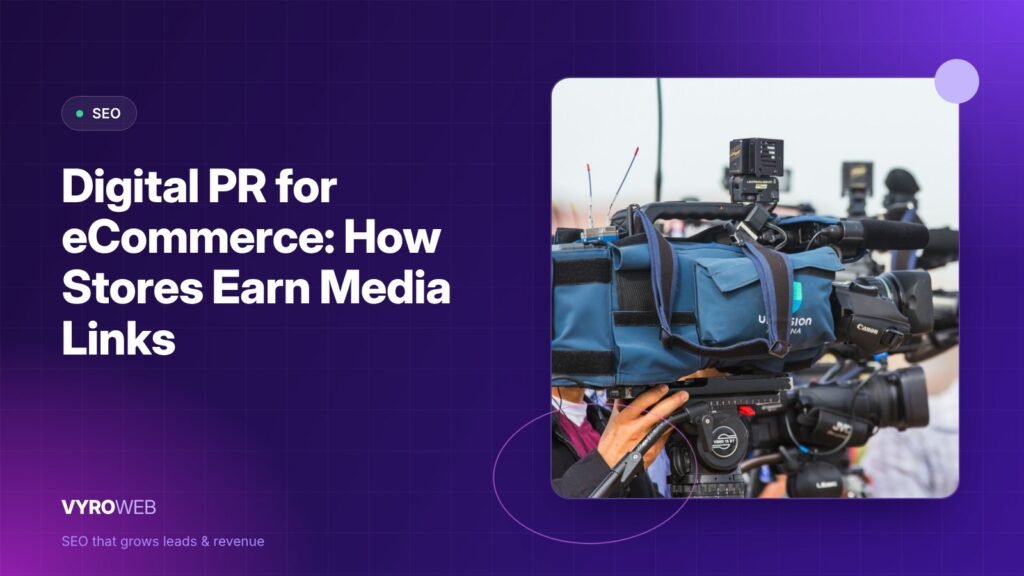
Digital PR for eCommerce is the practice of creating stories journalists want to cover, then pitching them so your store earns links and mentions from news sites, magazines and niche publications. Done well, it produces the kind of links that are hard to buy and hard for competitors to copy.
It is also the link building tactic most stores get wrong. They send product announcements nobody asked for, or pay for a press release on a wire service and wonder why nothing ranks. Journalists do not cover products. They cover stories, data and people.
This guide shows US store owners how to find angles that work for a product business, run a campaign step by step, time it around editorial calendars and turn the coverage into rankings for the pages that sell.
Want a team to run campaigns for you? See our digital PR services for online stores.
Quick Answer
Digital PR for ecommerce means earning editorial links by giving journalists something newsworthy: original data from your store, survey results, expert commentary or a strong product story. Pitch targeted writers, link coverage to your site, then pass that authority to category and product pages through internal links.
Key Takeaways
- Journalists cover stories, not products. Lead with data, trends, expert insight or a human angle.
- Your own order and search data is the most defensible source of story ideas a store has.
- Most media links land on your homepage or a campaign page, so plan internal links to pass authority to categories.
- Timing matters: gift guides and seasonal stories are planned well before the season.
- Measure linked coverage, referring domains, branded search and rankings of target pages, not just mention counts.

What Digital PR Looks Like for an Online Store
Traditional PR aims for coverage and reputation. Link outreach aims for links, often from smaller blogs. Digital PR sits between the two: it uses PR methods to earn coverage from real publications, with links and brand visibility as the measurable outcome.
| Traditional PR | Link outreach | Digital PR | |
|---|---|---|---|
| Main goal | Reputation, awareness | Links to specific pages | Editorial links plus brand visibility |
| Typical targets | Print, TV, top-tier media | Niche blogs, resource pages | Online news, magazines, niche publications |
| Hook | Company news, launches | Content that fits the site | Data, trends, expert comment, stories |
| Success measured by | Coverage and sentiment | Links placed | Linked coverage, referring domains, rankings |
For a store, ecommerce digital PR has one extra challenge: the pages you most want to rank, like categories and products, are the pages journalists are least likely to link. That shapes how you plan everything else.
Why Media Links Matter for eCommerce SEO
A link from a respected publication is an editorial vote that is very hard to fake. A handful of these can do more for a domain than dozens of low-quality links, which is why digital PR link building is worth the effort even though results are less predictable.
- Domain authority. Strong referring domains lift how well your whole site competes, including category pages that will never earn links themselves.
- Brand demand. Coverage puts your store name in front of new audiences, and some of them search for you later.
- Referral sales. Product-led coverage, such as a gift guide feature, can send buyers directly.
- AI answers. Assistants that summarize the web lean on sources they consider reputable. Being mentioned in those sources can help your brand show up in AI-generated recommendations, though no one can promise how any model weighs them.
Digital PR Campaign Types That Work for Stores
1. Data from your own store
Your order data, site search terms and returns data describe real consumer behavior. Aggregated and anonymized, it can produce stories like which states buy the most of a product, how buying shifts around a holiday or which sizes sell out first. No competitor has the same data, so the story is yours.
2. Surveys
If your own data is thin, a commissioned consumer survey can answer a question journalists care about. Use a reputable panel provider, publish the methodology and sample size, and ask questions that produce a clear headline rather than a muddy one.
3. Expert commentary
Founders, buyers, product developers and in-house specialists can comment on trends in their field. Monitor journalist request services and the #journorequest hashtag, and respond fast with a short, quotable answer. This reactive work earns steady links with modest effort.
4. Product stories and gift guides
A product is newsworthy when it solves a problem in an unusual way, ties to a trend or has a story behind it, such as how it is made or who designed it. Gift guides and “best of” roundups are the most direct route to links pointing at products.
5. Indexes, rankings and tools built from public data
Combine public datasets into a ranking or index relevant to your niche, such as the best US cities for cyclists for a bike accessories store. Interactive tools and calculators can keep earning links long after launch.
6. Local and founder stories
Regional US outlets cover local businesses, hiring, expansions and founders with interesting backgrounds. These links are easier to win than national coverage and often come with real community interest.
How to Run a Digital PR Campaign Step by Step
- Choose the pages you want to rank. Write down the categories and products the campaign should eventually help. This keeps the angle connected to commercial goals.
- Find an angle that needs your store. Ask what you know that a journalist cannot easily find elsewhere. If any brand could publish the same story, it is weak.
- Build the asset. Publish a campaign page on your site with the findings, methodology, charts and a few quotable lines. This is the page journalists will link to.
- Build a targeted media list. Find writers who have covered similar topics recently. Twenty right writers beat five hundred random ones.
- Pitch short and specific. A subject line with the headline, two or three sentences on the finding, why it matters to their readers and a link to the full data.
- Follow up once. One polite follow-up a few days later is fine. More than that damages relationships.
- Track coverage and reclaim links. Some outlets will mention your brand without linking. Ask politely for a link to the source data, as covered in our guide to unlinked brand mentions.
- Pass the authority on. Link from the campaign page to the relevant categories and products, as covered below.
Worked example: a hypothetical coffee equipment store
This example is hypothetical. A store selling grinders, kettles and brewers sees from its order data that pour-over kettle sales climb sharply in certain colder states each winter, and that site searches for “quiet grinder” rose over the year.
- Angle: “The states that brew the most coffee at home in winter,” built from anonymized order data per capita.
- Asset: A campaign page with a state map, the methodology and brewing tips from the store’s head of product.
- Targets: Regional news desks in the top-ranking states, food and drink writers, and home and lifestyle editors.
- Internal links: From the campaign page to the pour-over kettles and coffee grinders categories, with descriptive anchors.
Regional outlets tend to cover stories that mention their own state, so one dataset can produce many local angles.
A pitch template you can adapt
Subject: [State] ranks #2 for home coffee brewing in winter
Hi [Name], I saw your piece on [recent related article]. Our order data from [store] shows [finding about their state], ahead of [comparison]. The full ranking and methodology are here: [link]. Our head of product can comment on [specific angle] if useful. Thanks, [Name]
Timing: Plan Around Editorial Calendars
Journalists plan seasonal content earlier than most stores expect. If you pitch a holiday gift guide in late November, most of those guides are already written. Timing windows vary by outlet, so treat the table as a planning guide, not a rule.
| Season or event | When to pitch | Good angles |
|---|---|---|
| Holiday gift guides | Summer to early fall | Gifts by recipient or budget, unusual products |
| Black Friday and Cyber Monday | October to early November | Shopping behavior data, deal-hunting tips |
| New Year and January | November to December | Resolutions, fitness, organizing, budgeting |
| Valentine’s Day, Mother’s Day, Father’s Day | Roughly two to three months ahead | Gift trends, last-minute ideas |
| Back to school, summer travel | Spring | Checklists, cost data, product picks |
Reading this the week before Black Friday? Reactive commentary on holiday shopping still works now, and it is the right moment to plan January stories. Pair the PR calendar with your Black Friday marketing ideas so the stories and promotions support each other.
Turn Media Links Into Rankings for Pages That Sell
Most coverage links to your homepage or the campaign page, and some outlets link to nothing at all. That is normal. The job is to route that authority to commercial pages.
- Link from the campaign page to two to four relevant categories, with natural descriptive anchors.
- Make sure the homepage links clearly to your main categories, since it receives most branded links.
- Add links from related blog posts and guides to the same categories.
- Keep campaign pages live permanently. Removing them later wastes the links they earned.
Our guide to eCommerce internal linking explains how to set up those paths. Media links also tend to use your brand name or a headline as anchor text, which keeps your anchor text ratio natural.
How to Measure Digital PR Results
Coverage counts look good in reports but do not tell you whether the work is paying off. Track these instead:
- Linked coverage and new referring domains, separated from unlinked mentions.
- Link quality: relevance to your niche, real readership and whether the link is followed. Nofollow and sponsored links from strong publications still bring traffic and brand value.
- Rankings and clicks for target categories in Google Search Console over the following months.
- Branded search volume before and after major campaigns.
- Referral sessions and revenue from coverage, especially product-led features.
Expect a lag. Links take time to be crawled and to influence rankings, so judge a program over several campaigns, not one.
Digital PR vs Placed Links, and Mistakes to Avoid
Digital PR rarely covers every link need on its own. Some niches struggle to earn mainstream coverage at all. We have run niche edit and guest post campaigns for stores selling CBD gummies, mushroom gummies and disposable vapes, categories where many publications will not feature products. Those clients saw more keywords ranking, higher organic revenue and new referral revenue. A balanced eCommerce link building program often combines PR for authority with placed links for specific pages.
Common mistakes:
- Pitching products as news. A new colorway is not a story. A trend your sales data reveals might be.
- Paying for wire press releases for SEO. Syndicated release links are usually nofollow, and Google’s spam policies treat keyword-optimized links in distributed press releases as a link scheme.
- Weak data. Tiny samples or unclear methods get ignored or criticized. Publish the methodology.
- Mass pitching. Untargeted email blasts burn your domain’s reputation with journalists.
- Giving up after one campaign. Hit rates vary, and relationships with writers compound over time.
FAQ
What is digital PR in ecommerce?
Digital PR in ecommerce is using PR methods, such as data stories, surveys, expert commentary and product stories, to earn coverage and links from online publications. The goal is editorial links and brand visibility that improve search rankings and bring referral traffic.
How is digital PR different from link building?
Digital PR is one form of link building. Traditional link outreach asks site owners to add links to specific pages, while digital PR earns links by giving journalists a story worth covering. PR links tend to be stronger but less predictable.
How long does digital PR take to work?
A single campaign usually takes several weeks to plan, build and pitch, and coverage can keep arriving for months. SEO impact lags further because links must be crawled and counted. Judge results over a program of several campaigns.
Can small online stores do digital PR?
Yes. Small stores often do well with expert commentary, local and founder stories and niche publications. A store with a clear point of view and some original data can earn coverage without a large budget.
Do press releases help ecommerce SEO?
Paid wire press releases rarely help rankings directly because syndicated links are usually nofollow, and keyword-optimized links in distributed releases go against Google’s spam policies. Releases are useful for real company news, not as a link building tactic.
What makes a story newsworthy to journalists?
Journalists look for something new, relevant to their readers and backed by evidence: fresh data, a surprising trend, a strong human story or expert insight on a topic already in the news. A product alone is rarely enough.
Conclusion
Digital PR for ecommerce works when you stop pitching products and start offering stories only your store can tell: your data, your experts and your customers’ behavior. Plan around editorial calendars, publish solid campaign pages and route the authority they earn to the categories that make money.
If you want a program built around your catalog, explore our digital PR services or get a free link profile review.
Related reading
Ready to Grow Your Organic Traffic?
Let VYRO build and execute the right SEO strategy for your business - from local to international.